
When the Frosty Arctic Became the Heart of Christmas Magic
Saint Nicholas of Myra, the fourth-century bishop remembered for secret acts of charity, would scarcely resemble the cheerful Arctic resident who now appears in shop windows, storybooks, and family celebrations. The historical Nicholas belonged to the warm Mediterranean world of late antiquity. Modern Santa Claus, by contrast, lives among snowdrifts, reindeer, chimneys, toy benches, and glowing fireplaces. His transformation was not a single invention, but a gradual cultural journey shaped by religion, folklore, poetry, commerce, exploration, and illustration.
During the nineteenth century, printed images carried Christmas stories into increasingly comfortable Victorian parlors. Magazines, newspapers, greeting cards, and illustrated books gave families a shared visual language for the season. At the same time, the public was fascinated by expeditions seeking the Northwest Passage and the geographic North Pole. The result was a remarkable collision of Arctic adventure and domestic holiday warmth. The remote frozen North became a perfect stage for an imaginary Christmas kingdom, far beyond ordinary geography yet close enough to visit through pictures and storytelling. For families exploring the history of festive traditions, the story of Santa”s Workshop history offers a later example of how this invented landscape could become a physical family destination.
From Mediterranean Bishop to Jolly Sinterklaas
Saint Nicholas was traditionally identified as a Christian bishop of Myra in Lycia, a region of present-day Turkey, during the fourth century. Stories about him emphasized generosity performed quietly, especially toward children and families facing hardship. The best-known legend tells of a poor father whose daughters needed dowries, with Nicholas secretly providing the necessary gifts. Whether every detail belongs to history or folklore, the story established a powerful Christmas theme: a benefactor who gives without seeking recognition.
Over centuries, devotion to Nicholas spread through Europe and developed local customs. In the Netherlands, he became Sinterklaas, a dignified gift-bringer associated with a December 6 feast. Dutch traditions included a bishop”s robes, a staff, a white horse, rooftop visits, and gifts placed in shoes. As Dutch immigrants carried these customs to New Amsterdam and later New York, the character entered a new cultural environment where religious observance blended with winter celebrations, family gatherings, and popular entertainment. The transition from saintly protector to household visitor can be traced through several changes:
- The December feast became increasingly connected with the broader Christmas season.
- Private charity evolved into playful gift-giving rituals for children.
- European legends mixed with English Father Christmas and older winter folklore.
- Poetry and illustrated publications shifted attention from church ceremony to home-based imagination.
Early nineteenth-century writers helped give the character a more flexible and familiar personality. Washington Irving described Dutch New York customs with affectionate humor, while Charles Dickens helped popularize the idea of Christmas as a season of family feeling, hospitality, and moral renewal. Clement Clarke Moore”s 1822 poem, commonly known as “A Visit from St. Nicholas,” added details that would become central to the modern figure, including a miniature sleigh, flying reindeer, a chimney descent, and a cheerful visitor who arrived while children slept. As historians of the image have shown in this pictorial history of Santa Claus, the familiar character emerged through layers of adaptation rather than from one original portrait.
Arctic Fever and the Appeal of an Untouched Polar Kingdom
Victorian audiences were captivated by the polar regions. Newspapers followed expeditions with a mixture of scientific interest, national pride, and dramatic suspense. Ships disappeared into pack ice, explorers endured months of darkness, and maps still contained blank spaces that invited speculation. The North was presented as both a real environment and a symbolic frontier, a place where ordinary rules seemed suspended. Its whiteness, remoteness, and extreme climate made it especially suitable for imaginative storytelling.
The North Pole also solved a practical cultural problem. Santa needed a home that belonged to no particular city, nation, or household. Placing him in the Arctic created a neutral sanctuary that could be imagined by families across the English-speaking world and eventually far beyond it. Snow made the setting instantly recognizable as wintry, while the distance protected its mystery. Children could ask where Santa lived without expecting an answer that could be checked on a map. The more inaccessible the location, the more convincing the magic became.
This transformation softened the dangerous Arctic frontier into a welcoming snowscape. Exploration narratives emphasized storms, starvation, ice pressure, and peril, whereas Christmas illustrations replaced danger with tidy paths, warm windows, friendly animals, and busy workshops. The same landscape that represented hardship in expedition reports became a place of purity and abundance in seasonal art. Reindeer, already associated with northern regions, fitted naturally into the story, while perpetual snow created an ideal visual backdrop for sleighs and rooftops. The Arctic connection was therefore less a claim about geography than an imaginative design choice, developed at the moment when polar mystery had become a major feature of popular culture.
Thomas Nast and the Visual Architecture of Santa Claus
Among the artists who gave this new figure a recognizable form, Thomas Nast was especially influential. A German-born American illustrator and political cartoonist, Nast began publishing Santa images in Harper”s Weekly during the American Civil War. His first major Santa illustration, “Santa Claus in Camp,” appeared on the magazine”s cover on January 3, 1863. It showed Santa visiting Union soldiers, distributing gifts and entertainment in a wartime camp. The picture combined Clement Moore”s playful elf with patriotic imagery, making Santa relevant to a national audience during a period of profound division and hardship.
Nast returned to Santa repeatedly, producing 33 depictions for the magazine between 1863 and 1886. Across these images, he gradually supplied the architecture of the modern legend. Santa became rounder, older, more expressive, and more clearly associated with fur clothing. He was shown with toys, letters, lists, a workshop, helpers, and a home at the North Pole. One illustration referred to “Santa Claussville, N.P.,” with the initials identifying the North Pole. By the late nineteenth century, Nast”s Santa had become a character with a workplace, schedule, transportation system, and moral record.
| Feature | Earlier traditions | After Nast”s popular prints |
|---|---|---|
| Identity | Bishop, saint, Sinterklaas, or Father Christmas | A distinct Christmas gift-bringer with a comic and affectionate personality |
| Clothing | Robes, cloaks, or varied winter garments | Heavy fur-trimmed clothing, although colors remained varied for decades |
| Home | No fixed universal residence | A North Pole village and workshop |
| Transport | Horse, rooftop journey, or later a sleigh | A fully developed flying sleigh and reindeer team |
| Character tools | Staff, gifts, and religious symbols | Lists, letters, toys, workshop equipment, and the naughty-or-nice book |
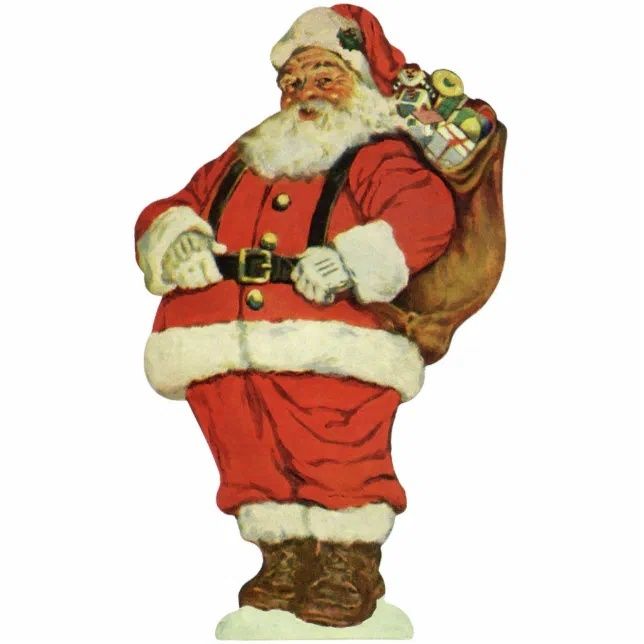
Nast did not single-handedly invent every detail, and the red suit was not immediately standardized. Santa appeared in many colors during the nineteenth and early twentieth centuries. Later artists, including those working in advertising and children”s publishing, refined the image. Coca-Cola campaigns of the 1930s and 1940s helped spread a particular red-and-white version, but they popularized an established visual tradition rather than creating Santa from nothing. The essential work had already been done by poets and illustrators who made an invisible visitor visible.
Inside the Polar Toy Shop That Defined Modern Christmas
Once Santa had a northern address, the workshop became the natural center of his story. Illustrators filled it with cheerful industrious elves, wooden benches, hand tools, glowing hearths, shelves of toys, and mountains of parcels. This setting reflected Victorian admiration for skilled labor and organized production, but it also kept the atmosphere intimate. The workshop was not shown as a cold factory. It was a warm, purposeful household where every object suggested care, preparation, and anticipation.
The visual formula remains familiar because it balances two appealing ideas. Santa”s operation is enormous enough to explain the worldwide delivery of gifts, yet personal enough to suggest that every toy has been selected and made with a particular child in mind. Contemporary Christmas attractions have often borrowed this pattern. Santa”s Workshop near Wilmington, New York, opened in 1949 with a frozen North Pole, shops, animals, and a traditional Santa experience. Its early popularity grew through newspaper coverage and newsreels, demonstrating how a printed fantasy could eventually become a place families visited in person.
- Begin with the home base. A snowy village, workshop, or welcoming cabin gives the story a clear destination.
- Add signs of preparation. Lists, letters, wrapped parcels, tools, and workbenches show that Christmas magic involves care and effort.
- Make warmth visible. Hearths, lanterns, candlelight, and wooden interiors turn an extreme climate into a comforting family space.
- Give animals a role. Reindeer stables and sleigh equipment connect the magical workplace to its Arctic setting.
- Preserve room for mystery. A partly hidden door, distant tower, or snowy path allows children to complete the scene through imagination.
These elements also explain why the North Pole remains so effective in family storytelling. It turns preparation into adventure and household rituals into part of a larger world. Writing a letter becomes contact with the workshop. Hanging a stocking becomes an invitation. Looking for hoofprints or listening for sleigh bells transforms an ordinary night into a shared imaginative event. The Victorian illustrators understood that Christmas magic works best when it is built from recognizable details: wood, wool, paper, firelight, animals, and patient work.
Bringing the Wonder of the Victorian North Pole into Your Home
The modern Santa story owes its enduring appeal to nineteenth-century creators who combined old legends with new visual possibilities. A Mediterranean bishop became a Dutch gift-bringer, then an American Christmas visitor, and finally an Arctic craftsman surrounded by a complete imaginary community. Polar exploration supplied the setting”s mystery, while magazines and illustrated poems supplied its furniture. The result was a tradition that feels ancient because it borrows from centuries of folklore, yet familiar because its most recognizable details were shaped by relatively recent artists.
Families can echo that heritage without reproducing an elaborate theme park. The most effective decorations are often small, tactile, and story-rich:
- Create a simple letter-writing station with paper, envelopes, pencils, and a small lantern.
- Use wooden toys, handmade ornaments, wool blankets, and paper stars to suggest a craft-focused workshop.
- Arrange books of Christmas poetry and folklore near a comfortable reading chair.
- Add a stocking, a miniature sleigh, or a set of reindeer figures as clues in a seasonal story.
- Leave space for children to invent their own North Pole details, from elf names to workshop rules.
Above all, the Victorian North Pole is a reminder that holiday wonder is built through shared attention. A warm room, a familiar story, and a few carefully chosen objects can make an ordinary evening feel like a visit to a distant snowy kingdom. May the season bring generous hearts, glowing hearths, creative hands, and plenty of time for families to enjoy the marvelous world that imagination continues to build.